3 min read
In this guide
Oats are sold under at least three different names — rolled oats, quick oats, and steel-cut oats — and recipes rarely explain which one they mean or whether it matters. In many cases it does matter, both for texture and gram weight. This guide explains the differences, gives exact cup-to-gram weights, and tells you when a substitution is safe.
What’s the Difference Between the Three Types?
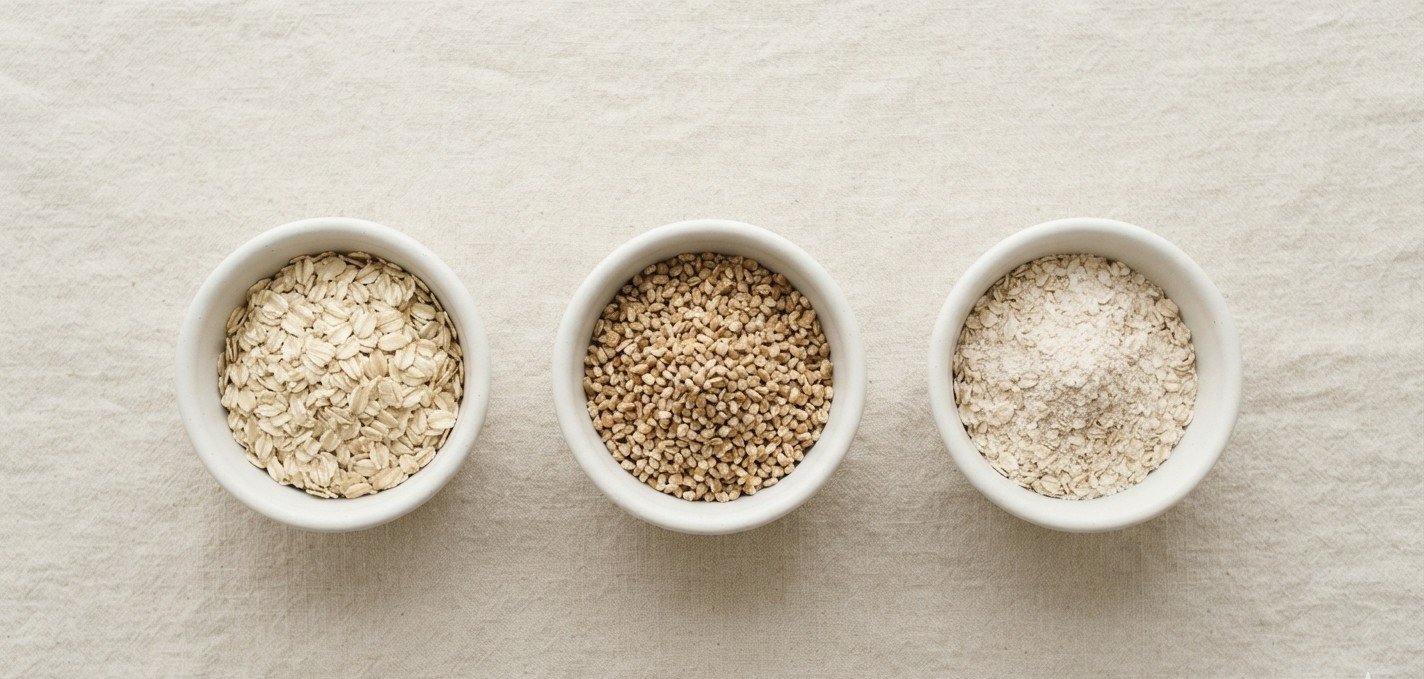
Steel-cut oats (also called pinhead or Irish oats) are whole oat groats cut into two or three pieces with a steel blade — the least processed of the three, with a firm, chewy texture and the longest cooking time (20–30 minutes on the hob).
Rolled oats (also called old-fashioned or porridge oats) are groats that have been steamed and flattened between rollers. They cook in about 5 minutes, hold their shape reasonably well in baking, and are the default “oats” in most baking recipes unless otherwise specified.
Quick oats (also called instant or one-minute oats) are rolled oats rolled thinner and sometimes pre-cooked. They absorb liquid faster and have a softer texture that can nearly disappear into batters.
Grams Per Cup: How They Compare
| Oat Type | 1 Cup | ½ Cup | ¼ Cup |
|---|---|---|---|
| Rolled Oats | 90g | 45g | 22g |
| Quick Oats | 85g | 42g | 21g |
| Steel-Cut Oats | 160g | 80g | 40g |
The difference between rolled and quick oats is small (about 5%) and rarely affects a recipe. The difference between rolled and steel-cut oats is substantial — nearly double the gram weight per cup — and matters significantly in baking.
Can You Substitute One for Another?
Rolled for quick oats (or vice versa): Generally safe in baking. The main change is texture — quick oats blend more smoothly, rolled oats leave more visible flake.
Steel-cut for rolled oats: Not recommended without adjustment. Steel-cut oats are much denser and won’t soften enough in typical baking times, producing a harder, chewier result than intended.
Rolled for steel-cut in porridge: Possible, but expect a softer, creamier result rather than the intended chew.
Which Type Do Baking Recipes Usually Mean?
When a recipe simply says “oats,” it almost always means rolled oats — this applies to cookies, flapjacks, crumbles, granola bars, and oat-based breads. Quick oats are only specified when a smoother texture is wanted. Steel-cut oats are rarely used in baking at all; they appear mainly in porridge and slow-cooked preparations.
For any oat conversion, use the cups to grams converter, which covers all three oat types individually. If you’re scaling an oat-based recipe, the recipe scaler handles the arithmetic automatically. Need a different substitution entirely? See the baking substitutions guide.