4 min read
In this guide
Most baking failures that get blamed on the recipe are actually caused by one thing: too much flour. Not because the recipe is wrong, but because of how the flour was measured. If you scoop a measuring cup directly into a bag of flour, you can easily pack in 150–160 grams — when the recipe was written expecting 120 grams. That 25–30% difference is often all it takes to turn a light sponge into a dense brick.
The good news is that the fix is simple, and once you know it, you’ll use it automatically. This guide explains the correct technique, why it matters, and what to do if you’d rather skip cups entirely and measure by weight instead.
Why Flour Measurement Goes Wrong
Flour is compressible. Unlike granulated sugar or salt, which pour freely and settle consistently, flour traps air between its particles and compresses easily under pressure. When you push a measuring cup down into a bag of flour and scoop it up, the sides and base of the cup compress the flour as it enters — and you end up with significantly more grams than the recipe intended.
This isn’t a mistake unique to beginners. Even experienced bakers who know about the problem still occasionally end up with over-packed cups when working quickly. The only way to eliminate the variable entirely is either to use the spoon-and-level method every time, or to switch to weighing by grams.
The Correct Method: Spoon and Level
- Fluff the flour first. Use a spoon or fork to gently loosen the flour before measuring. Flour compresses during storage, and fluffing it re-introduces air.
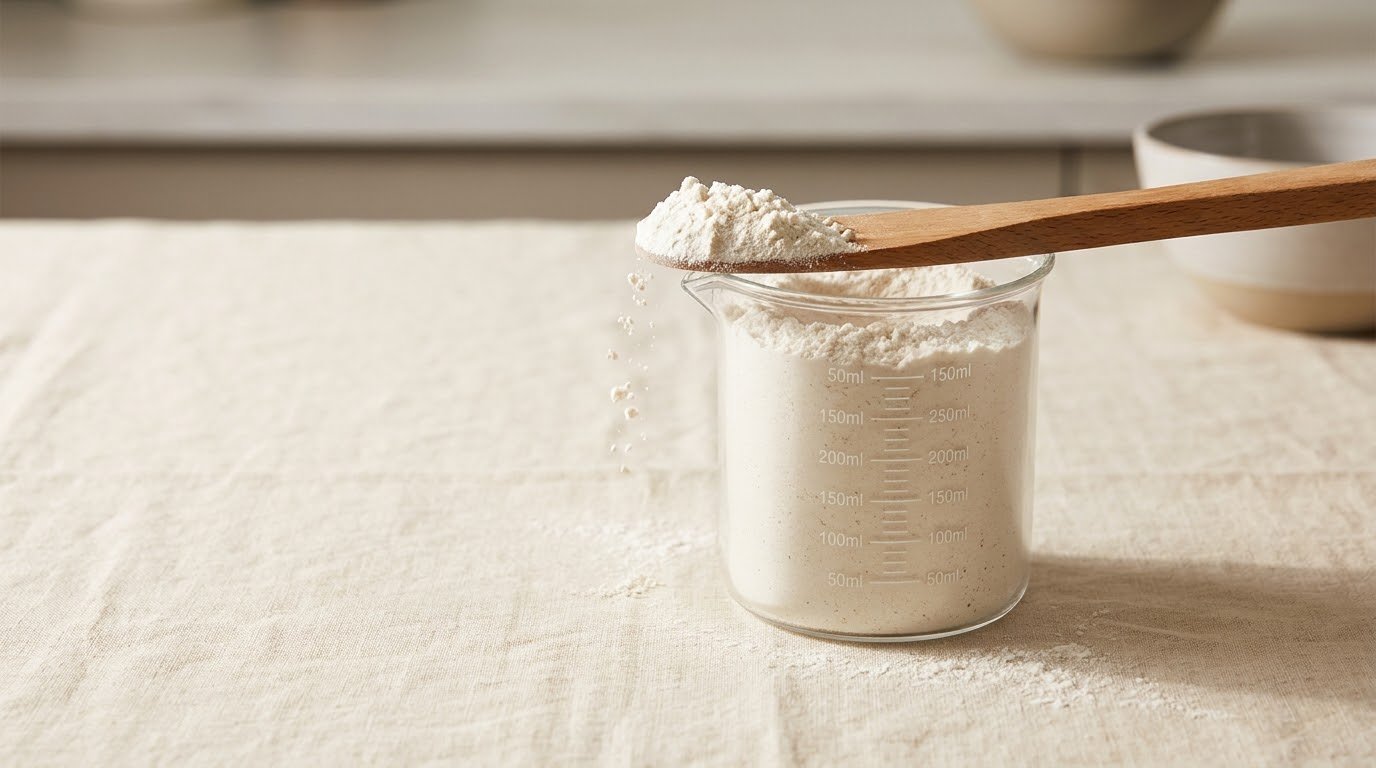
- Spoon the flour into the cup. Scoop flour into the measuring cup one spoonful at a time until slightly overfull. Do not scoop the cup directly into the bag.
- Level it off. Run the flat back of a knife across the top of the cup to remove the excess. The surface should be flat — not domed, not pressed down.
- Don’t tap the cup. Tapping or shaking to settle the flour compresses it, defeating the purpose.
Using this method consistently, one cup of plain (all-purpose) flour should weigh approximately 120 grams — the figure KitchenConvert’s calculators are based on.
What About Sifted Flour?
Some older recipes specify “1 cup sifted flour” rather than “1 cup flour, sifted.” These mean different things. “1 cup sifted flour” means sift first, then measure — sifted flour is lighter, so a cup weighs less (around 100–110g). “1 cup flour, sifted” means measure first, then sift — the weight stays at the standard 120g. If a recipe uses this older phrasing, pay attention to the order.
The Easier Alternative: Measuring by Weight
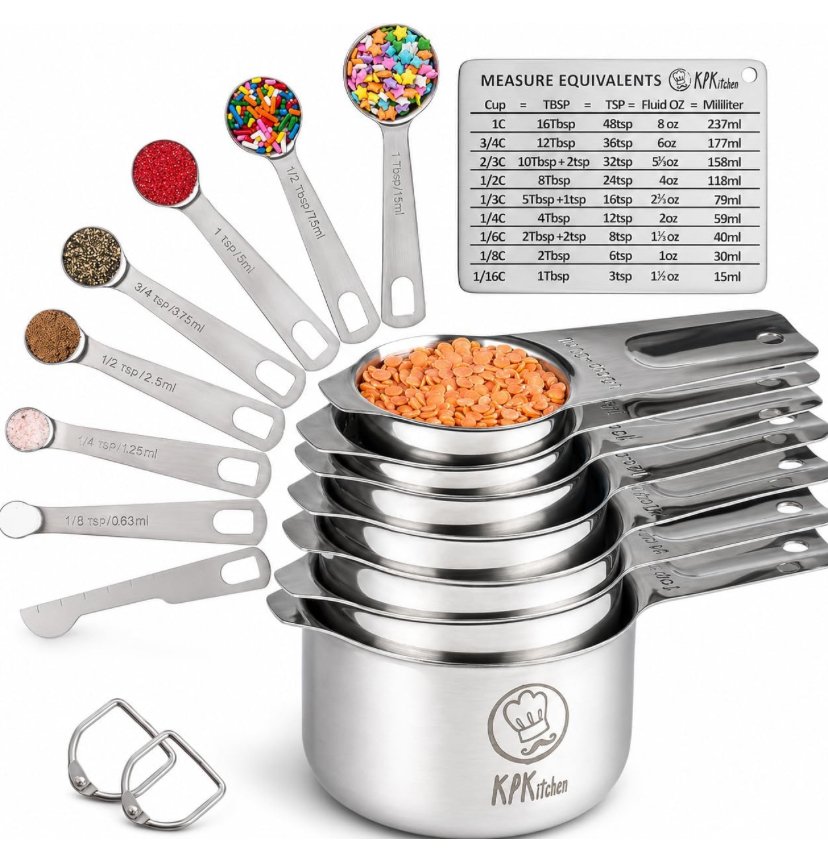
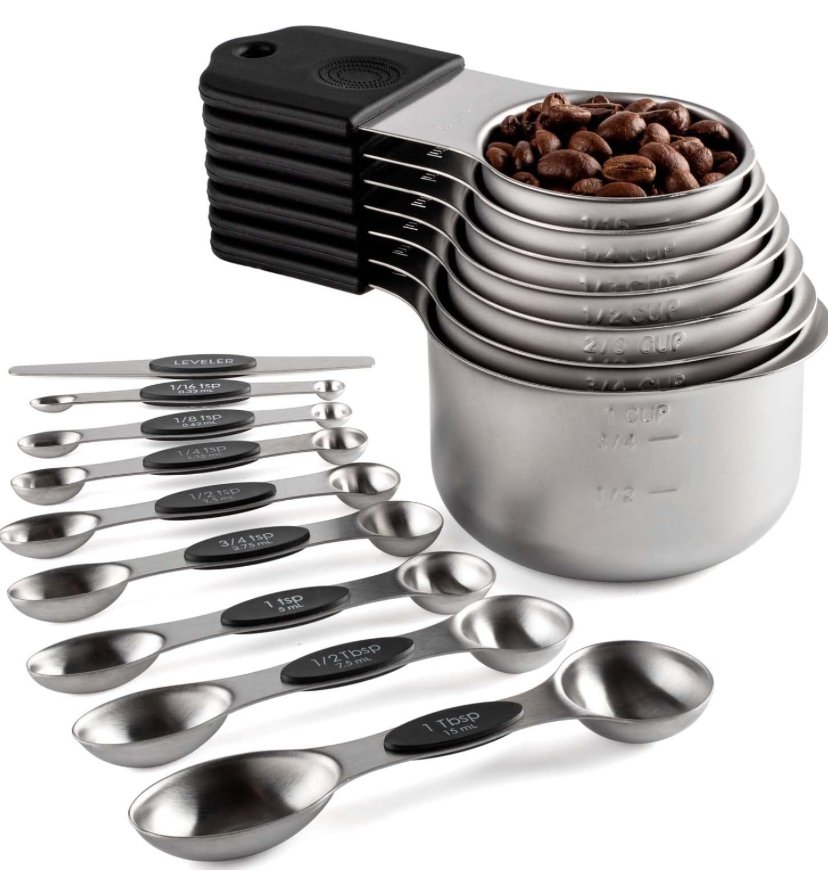
The spoon-and-level method is reliable when done carefully, but weighing directly in grams removes the human variability entirely. You add ingredients straight into your mixing bowl, zero the scale between each one, and never wash a measuring cup. If you’re not already baking by weight, a properly calibrated set of measuring cups used with this method is a solid short-term solution, but a digital scale is the long-term upgrade that removes the variable completely.
For a full breakdown of gram weights for common baking ingredients, see our guide to how many grams are in a cup, or use the cups to grams converter for a specific ingredient.
Self-Raising Flour: Does the Method Change?
No — the spoon-and-level method applies to self-raising flour exactly as it does to plain flour, and one cup also weighs approximately 120 grams. If your recipe calls for self-raising flour and you only have plain, you can make your own self-raising flour with just two extra ingredients — the cup weight stays the same.
Quick Summary
- Never scoop the measuring cup directly into the flour bag.
- Fluff the flour first, then spoon it into the cup.
- Level with a straight edge — don’t tap or press.
- 1 cup of correctly measured plain flour ≈ 120 grams.
- For the most consistent results, weigh your flour in grams instead.